


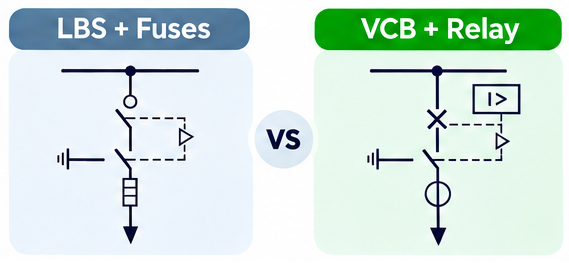
Looking Beyond the Initial Investment
An LBS with fuses remains a common and cost-effective solution for transformer protection. However, as distribution networks evolve, protection requirements go beyond simply interrupting a fault. Greater selectivity, configurable protection settings, remote operation and integration into automated networks are becoming increasingly important.
This is where a vacuum circuit breaker (VCB) offers a clear advantage. Combined with a numerical protection relay, it provides adjustable protection characteristics, improved coordination and the flexibility to integrate remote control and distribution automation.
While an LBS solution may offer a lower initial purchase price, its operational and upgrade possibilities are more limited. Retrofitting motorized operation or introducing advanced automation may require substantial modifications or even replacement of the entire switchboad. Choosing a VCB-based solution from the outset provides greater flexibility, protects the investment and helps avoid unnecessary replacement costs as network requirements evolve.
Key Advantages of VCB Solutions

Longer operating life
A typical LBS has a mechanical endurance of 2,000 operations, compared to up to 10,000 operations for a VCB, providing greater flexibility and durability.
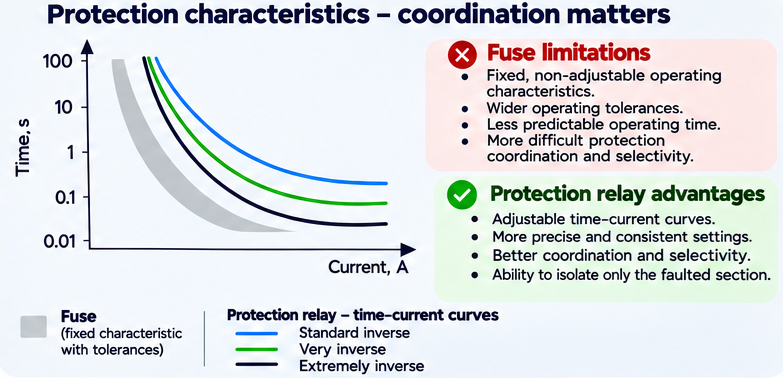

More accurate and flexible protection
Fuses have fixed characteristics and inherent tolerances in their operating times. An LBS also requires striker-equipped fuse links and a mechanical tripping mechanism to ensure three-phase disconnection when any individual fuse operates. This adds mechanical complexity and requires proper coordination between the fuses and the LBS. A numerical protection relay, by contrast, offers adjustable settings and a choice of time-current curves, allowing more precise protection coordination and selectivity.

SCADA integration and future automation
A numerical protection relay provides a foundation for SCADA integration, remote monitoring and fault information. VCB can be equipped with a motor, either initially or as a planned future upgrade, enabling remote switching and network automation.

Lower lifecycle cost and upgrade flexibility
A fused LBS panel cannot be upgraded to motorized operation. If remote operation or automation becomes necessary later, replacing the entire panel — and likely the whole switchboard — will be required. Choosing a VCB-based solution from the beginning avoids substantial future replacement costs and reduces the total investment over the equipment’s lifetime.
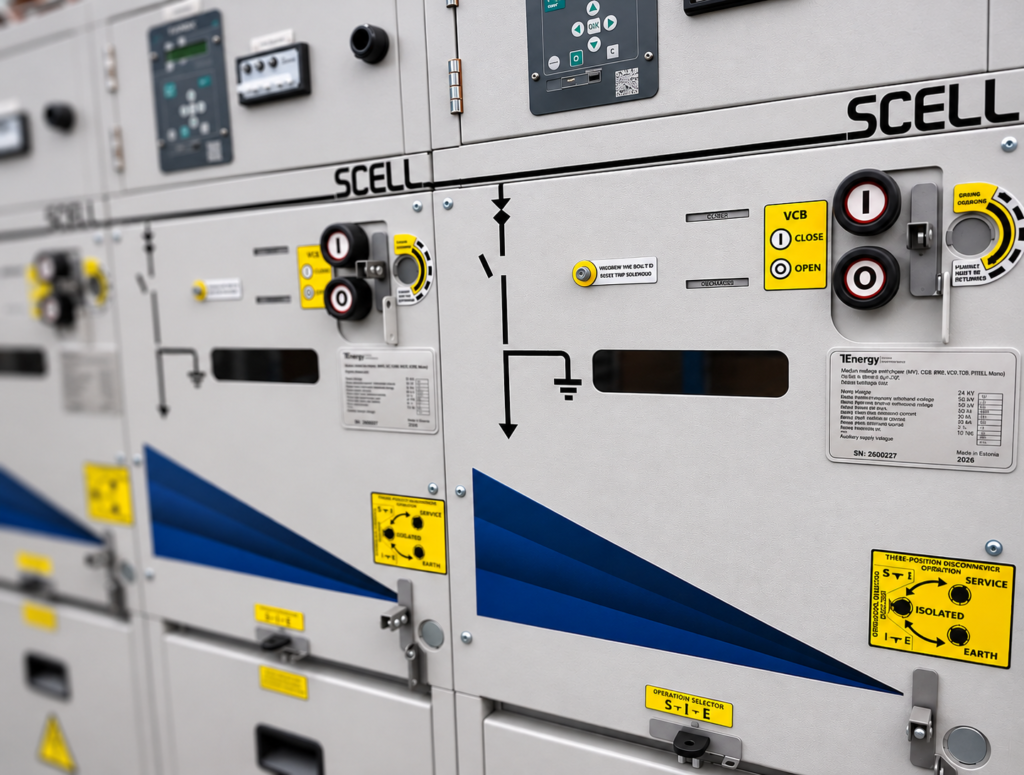
Solution: SCELL-MONO
TE Energy’s SCELL-MONO switchgear with a vacuum circuit breaker and numerical protection relay combines reliable fault protection, flexible operation and SF₆-free technology. It provides a future-ready solution that helps avoid costly equipment replacement when network automation requirements evolve.