

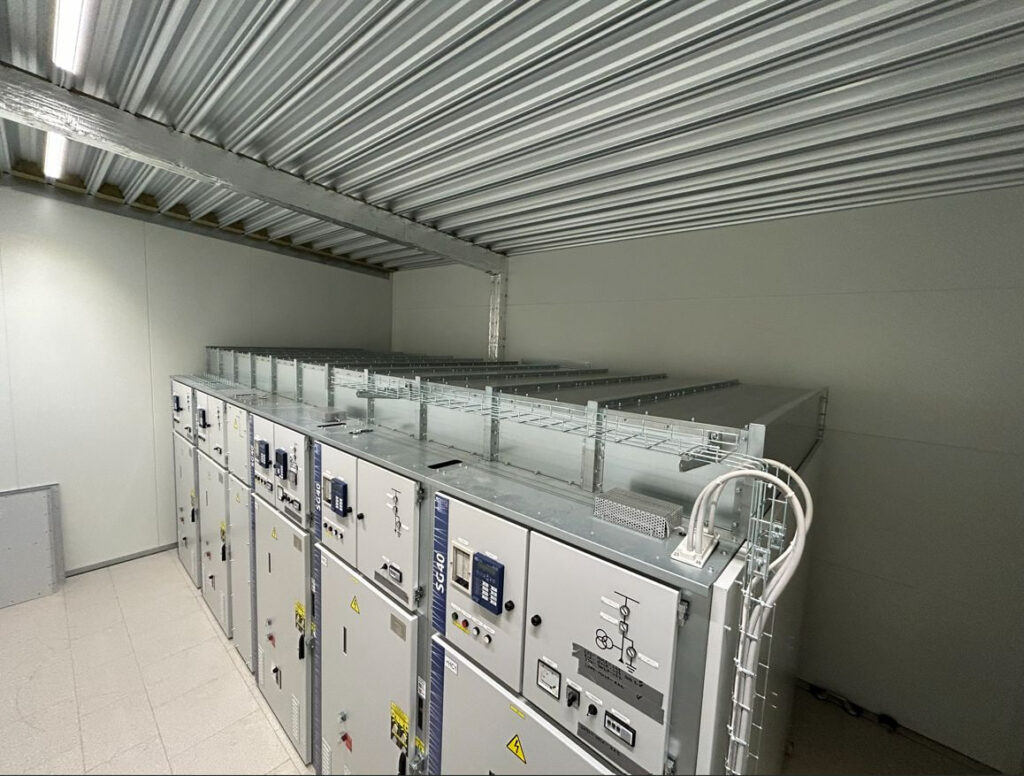
Can the electrical industry reduce emissions without sacrificing performance? The shift away from SF6 is proving it can.
From the 1950s onward, switchgear and electrical distribution systems worldwide have relied on sulfur hexafluoride (SF6) as an insulating medium. Non-toxic, stable, reliable and cost-effective, it was indispensable in paving the way for the miniaturisation of medium- and high-voltage substations.
But since the 1990s, SF6 has been recognised as a severe ecological threat. Reducing emissions of the gas has become an important environmental protection issue, and a key part of the global challenge to achieve net zero by the middle of the century.
Regulatory changes have forced electrical equipment manufacturers and their customers to look at sustainable alternatives. At TE Energy, we have proudly specialised in SF6-free solutions for many years, but how is the industry as a whole responding to the phase-out of fluorinated gases?
Why is SF₆ being phased out in electrical distribution systems?
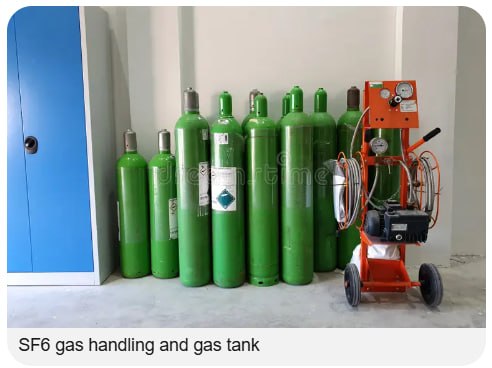 Fluorinated gases, or F-gases, are a group that includes hydrofluorocarbons (HFCs), perfluorocarbons and sulphur hexafluoride, among others. These human-made compounds are used in refrigeration, air conditioning, heat pumps, insulation, fire protection and power lines, as well as in industrial processes.
SF6 is by far the most commonly used F-gas for electric power transmission, with its popularity in switchgear stemming from its non-toxicity, stability, and ability to provide reliable, high-performance, and cost-effective electrical insulation and interruption.
However, since the 1990s, it has been recognised as the most potent greenhouse gas (GHG), with a global warming potential between 16,300 and 34,900 times greater than that of carbon dioxide (CO2) and a lifetime in the atmosphere of 3,200 years. The Kyoto Protocol, the Paris Agreement and the Kigali Amendment to the Montreal Protocol all set out binding targets for signatories to phase out F-gases.
SF6 emissions from switchgear still represent a significant slice of electricity companies’ direct GHG emissions. Statnett, the transmission system operator in Norway, reported that 72% of its direct emissions in 2024 came from SF6, so it’s clear that there is still a long way to go.
What are the leading SF₆-free alternatives for switchgear and grid infrastructure?
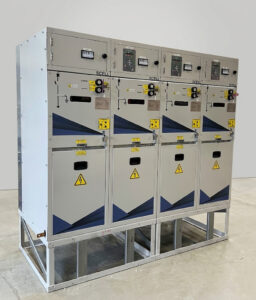 The European Union is leading the charge on SF6 reduction. EU regulations came into force on 1 January 2026 prohibiting the use of F-gases for insulation and arc-quenching in new medium-voltage switchgear up to 24kV. This will be extended to installations up to 52kV on 1 January 2030, and as of January 2035 the use of SF6 in maintenance and repairs will also be banned, except when the gas is recycled or in case of emergency.
Several US states have also introduced rules and targets to reduce emissions from gas-insulated switchgear, while elsewhere in the world, switchgear OEMs and electrical utilities have voluntarily committed to reducing emissions and improving SF6 inventory tracking.
Transmission grids will need to be expanded in the coming years, as global electricity demand is expected to jump by 3.5% per year through the end of the decade. Utilities and infrastructure operators require sustainable alternatives to avoid contributing to SF6 emissions long into the future.
The UK’s National Grid has already made progress on reclaiming and storing gas from decommissioned assets, contributing to the development of a circular model for existing SF6, as well as on installing new high-voltage SF6-free switchgear. Elsewhere, such as in France, partnerships between utilities and OEMs are rolling out completely SF6-free switchgear systems.
Factoring in considerations of cost and compactness, several solutions now meet the technical requirements for breaking capacity and voltage ratings. Most products use a combination of vacuum interruption technology and synthetic air (typically a controlled mixture of nitrogen and oxygen) or natural gas mixtures (consisting of synthetic molecules blended with carrier gases such as CO2 and oxygen).
How are utilities maintaining reliability and safety while transitioning away from SF₆?
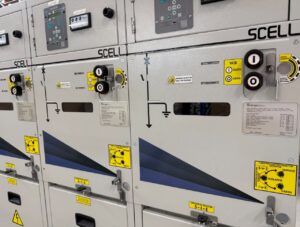 Increasingly, manufacturers are offering fully SF6-free medium-voltage solutions based on the above for primary and secondary distribution – reliable solutions that completely replace SF6 without sacrificing safety or performance.
At TE Energy, our vendor-agnostic design approach considers all available options on the market today. What’s more, our engineers have specialised in SF6-free MV voltage switchgear for more than 20 years, supplying customers such as Tallink Grupp, Enefit Power, Kubikenborg Aluminium AB, Vattenfall AB, N1 A/S and others. SF6-free switchgear like ours, which uses pure air instead of SF6, eliminates the need for fluorinated gases while maintaining high performance and reliability in a compact physical footprint.
In addition to reducing environmental impact, air-insulated technology can reduce the total cost of ownership, simplify maintenance procedures and reduce end-of-life handling and decommissioning requirements. Cost-effective, SF6-free switchgear technology helps our customers contribute to a sustainable environment while also lowering their maintenance and decommissioning costs.
The phase-out of fluorinated gases marks a pivotal moment for the electrical sector. As regulations evolve and sustainability targets become more ambitious, SF6-free technologies are moving from emerging alternatives to industry standards. Organisations that embrace this transition now can not only reduce emissions but also future-proof their infrastructure for a lower-carbon energy landscape.