

Estonia’s advanced manufacturing sector is thriving, benefiting trade partners worldwide, but how did it come to be the engineering hub it is today?
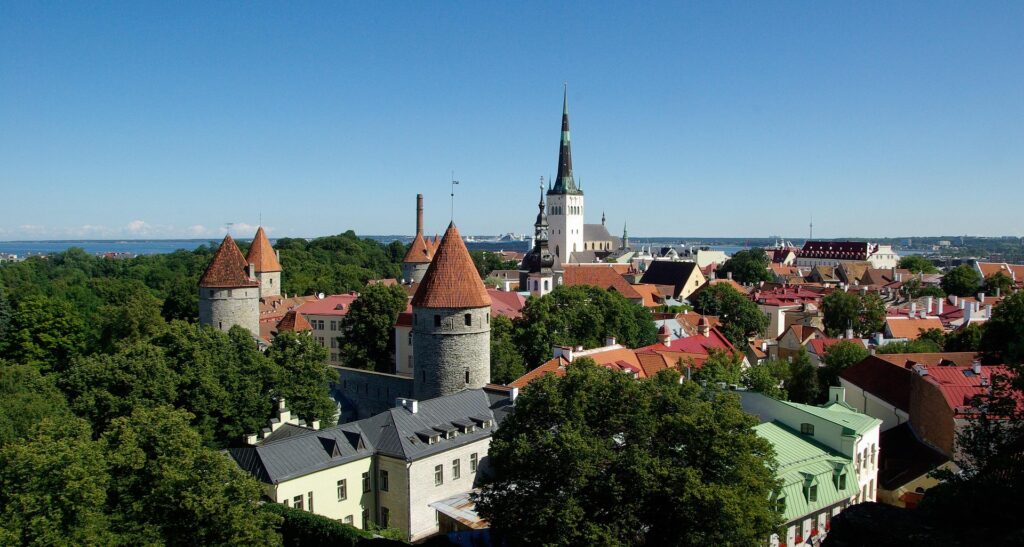
When those from outside our region think of Estonia, what do they imagine? Perhaps the red roofs and spires of Tallinn’s Old Town, which numbers among the best-preserved medieval cities in Europe, or the untouched forests and famously clean air of our countryside?
These are certainly aspects of Estonian identity in which we take great pride, but they are only part of the story. The country boasts the highest number of unicorns per capita in Europe, and is the birthplace of major tech firms from Skype and Bolt to Wise and Playtech. Both eu-LISA, the European Union’s primary IT agency, and NATO’s Cooperative Cyber Defence Centre of Excellence have their headquarters in Tallinn.
Manufacturing was the strongest driver of growth in the Estonian economy in 2025, with value added rising by 13.3% and GDP from the sector exceeding €825 million in the first quarter of 2026. Electronic and electrical equipment manufacturing is one of our nation’s fastest-growing industries, of which electrical machinery and apparatus is an important subsector.
All in all, Estonia provides an ideal environment for developing and delivering advanced engineering solutions worldwide, so let’s explore why this is the case.
Estonia’s digital infrastructure is the best in the world
 Based on principles of transparency, interoperability and security, Estonia has a highly developed digital infrastructure, including electronic signatures, mandatory national smart identification cards, e-Residency for non-Estonians, and a ‘once-only’ approach to citizen data.
All government services are available online as of December 2024, streamlining administrative processes and eliminating unnecessary bureaucracy. Under the Digital Agenda 2030 plans, ultrafast, reliable and affordable telecommunications connections will be available across the country by the end of the current decade, making it possible to create and use innovative services regardless of location.
Digitalisation is not just a boon in public life, but for business and industry, too. Already, nearly 99% of banking transactions in Estonia are conducted electronically. It takes less than 20 minutes to establish a company, and registration can be completed entirely online.
Estonian companies are pioneers in the digitalisation of processes across automation, robotics, and ICT within production chains. As well as rapid innovation and prototyping, digital solutions and intelligent devices enable real-time process optimisation and improve administrative efficiency, all of which have positive knock-on effects for customers in terms of the ease of doing business, product quality and delivery times.
Estonia actively incentivises research, development and investment
Another way in which the Estonian government seeks to enhance the nation’s growth and productivity is by incentivising research and development (R&D) and investment across target sectors, including manufacturing.
Resident companies and the permanent establishments of foreign entities (including branches) pay no income tax on reinvested and retained profits, providing a strong driver for companies to funnel funds into product development and innovation. Foreign and domestic investments in Estonia are also treated equally under the law.
Private sector R&D investment reached new heights in 2023, when total R&D spending rose to €702m, representing 1.84% of GDP. Private sector companies led this growth, contributing €405m – the highest level ever recorded.
Government support measures such as the Applied Research Program and the launch of the Applied Research Center serve to further accelerate technology scaling and support businesses in developing knowledge-intensive products. SmartIC is another initiative, partially funded by the European Union’s (EU) European Regional Development Fund, that enhances Estonia’s role in smart production and increases its global competitiveness in manufacturing.
Estonia’s highly skilled workforce is second to none
 It’s no coincidence that Estonia ranks first in the EU for basic skills, with the distinction of being the only country to reach the EU target in all domains – reading, science and maths. Our education system remains one of the most equitable in the Union, minimising the impact of socioeconomic background and location on individuals’ performance and potential.
Technology plays a key role in education from the earliest stages, enhancing rather than replacing traditional teaching methods focused on problem-solving and hands-on experimentation. This solid foundation of both practical and technical skills results in a highly qualified, technologically savvy workforce, where 86% of adults speak at least one foreign language, and the share of people with high-level qualifications is expected to increase to 48% by 2035.
With skilled workers in high demand, simple hiring processes and straightforward labour laws aim to make it easier to recruit from overseas. Attracting and retaining international talent will be key to maintaining Estonia’s growth and competitiveness in advanced manufacturing and electrical engineering as skills shortages become more acute.
Estonia’s advanced manufacturing sector has evolved into a dynamic and export-oriented industry. Combined with its strategic location in Northern Europe, the sector is exceptionally strong thanks to the country’s world-leading digital infrastructure, highly skilled technical workforce, and competitive tax-free reinvestment and R&D incentives.
Here at TE Energy, we are proud to operate from – and to represent – such a forward-looking and innovative nation, which punches well above its weight in advanced manufacturing globally.
Stay Ahead in Electrical Engineering
Get exclusive industry insights, technical deep-dives, and updates from TE Energy directly in your feed.