


SCELL-MONO 24kV
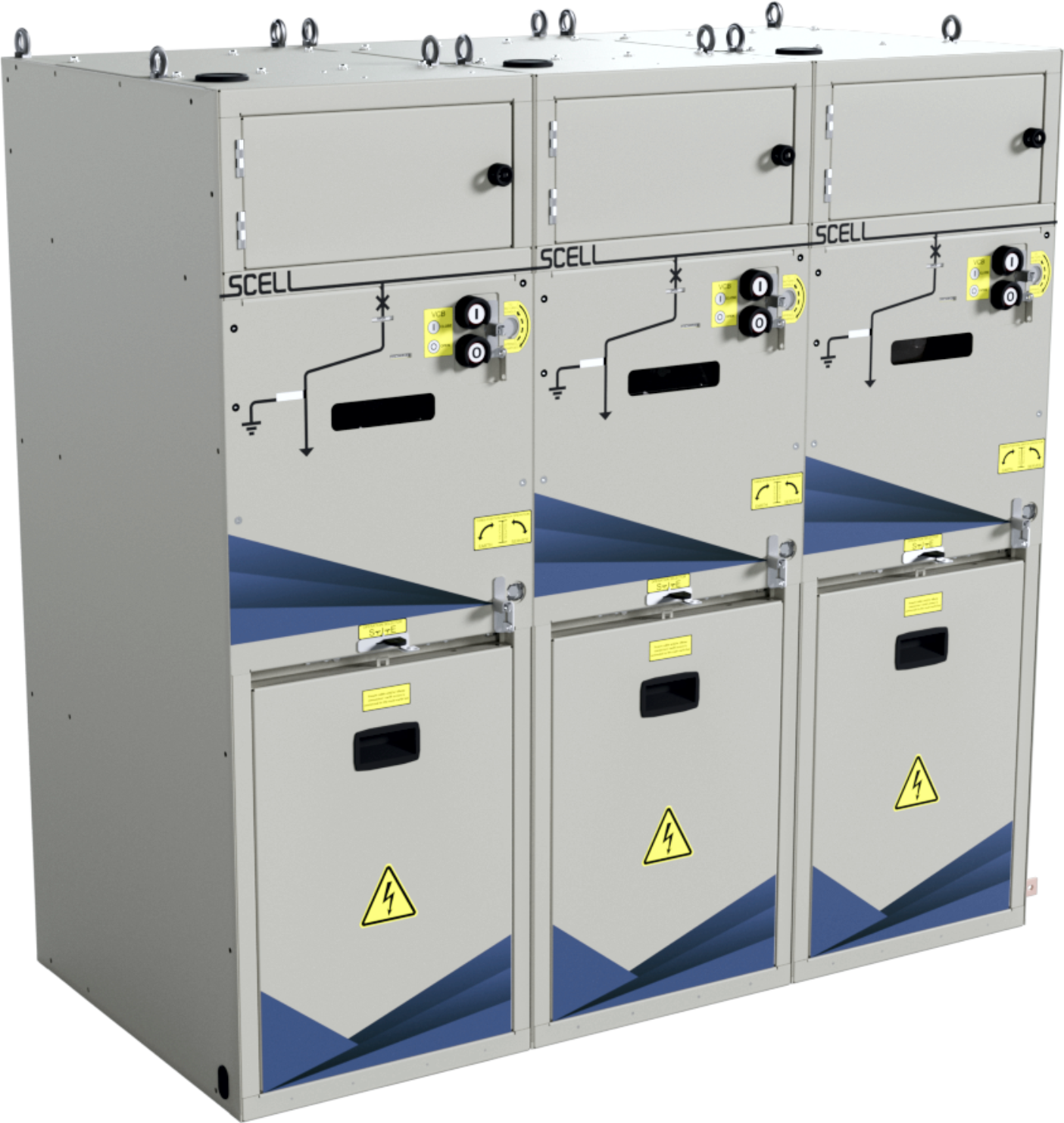
The switchgear features a naturally air-insulated Monoblock compartment that is fully sealed and rated IP67, with a transparent inspection window allowing visual monitoring of the COES.
Being completely sealed, the internal air pressure aligns with the external atmosphere, providing a fully reliable, maintenance-free insulation environment that requires no pressure monitoring or gas refilling. At the same time, by using natural air insulation instead of gases like SF6, the design significantly reduces the carbon footprint.
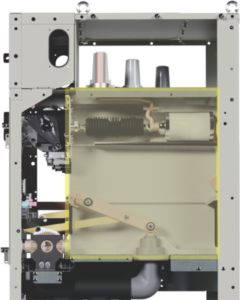
The SCELL-MONO offers a choice of either a vacuum circuit breaker (VCB) or load-break switch (LBS), paired with a versatile three-position Close–Open–Earthed Switch (COES), with ratings up to 24 kV, 1250 A, and 25 kA short-circuit withstand capability. This design provides flexible switching solutions for a wide range of applications, allowing users to select the most suitable configuration based on specific operational requirements.
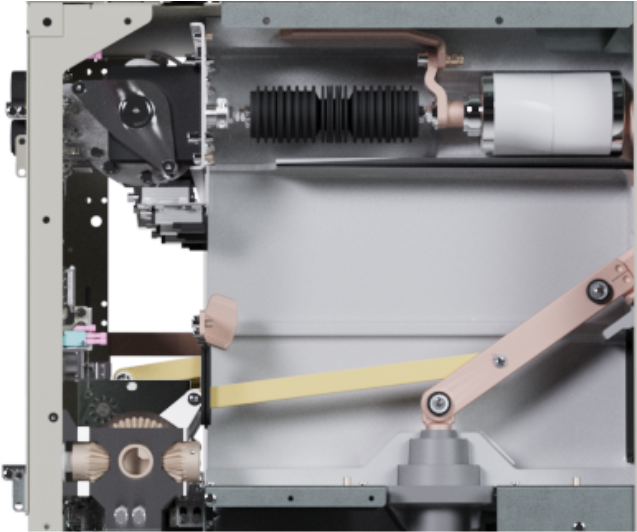
The VCB, LBS, and COES are equipped with a unique operating mechanism utilizing flat spiral springs to store the energy required for operation. Compared to the compression or extension springs commonly used in conventional switching devices, flat spiral springs provide a significantly more compact and efficient solution, making them particularly suitable for space-constrained SF₆-free air-insulated switchgear. In addition, the spiral spring design enables faster opening and closing operations, which are essential for the protection of sensitive equipment.
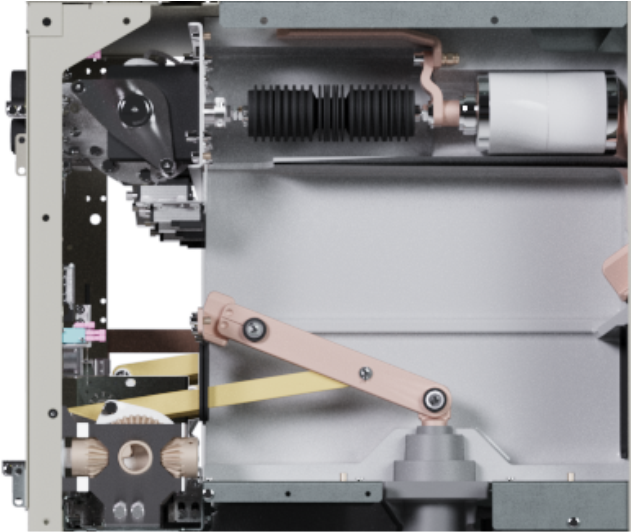
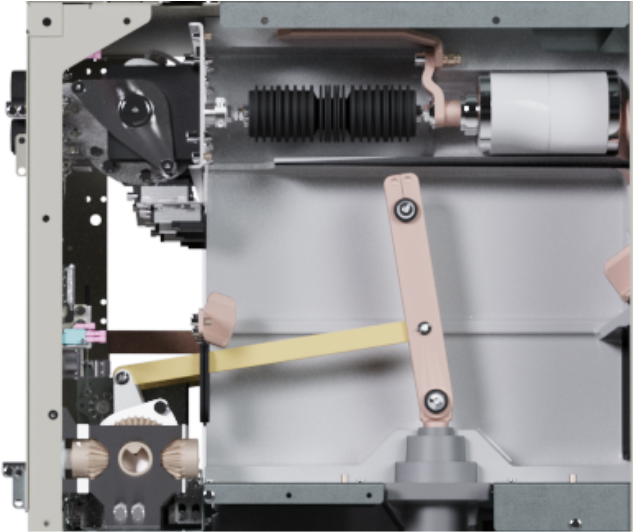
The standard Close–Open–Earthed Switch (COES) has three distinct positions:
 |
 |
 |
| EARTHED | ISOLATED | SERVICE |
Designed for maximum application flexibility, the switchgear provides Type A or Type C bushing interfaces for cable connections and supports up to four cables per phase.
Additionally, it can accommodate various sensing and monitoring devices, including conventional instrument transformers or sensor technology for current and voltage measurement, and can additionally be equipped with temperature monitoring, PD (partial discharge) detection devices, surge arresters, and cable testing facilities.
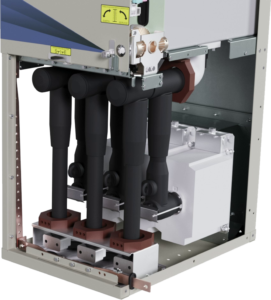
The main busbar system is designed for fast and reliable interconnection between panels through Type C interfaces rated up to 1250 A. The plug-in design enables quick assembly and simplifies installation on site while maintaining a high level of operational safety.
As a standard feature, the solution also allows easy extension of the switchgear lineup at any time, providing maximum flexibility for future network expansion and evolving operational requirements.
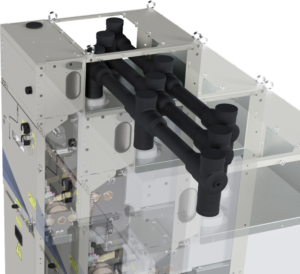
Each switchgear compartment is equipped with an individual pressure relief flap to ensure controlled evacuation of gases in the event of an internal arc fault.
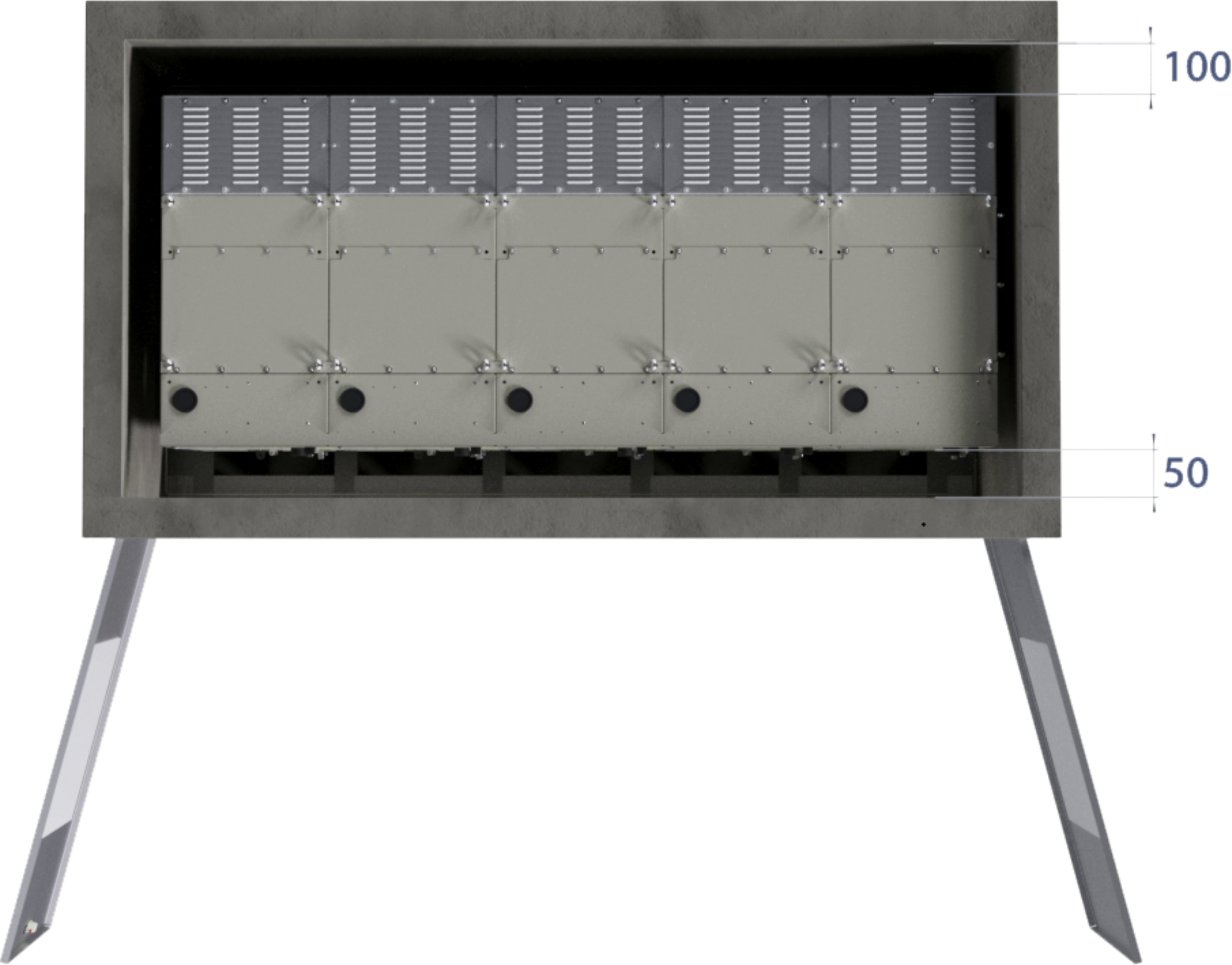
The switchgear is designed to achieve IAC AFL classification as standard and IAC AFLR classification with an optional rear attachment. The rear attachment enables directed evacuation of gases either to the cable cellar in kiosk substations or to a designated safe area in other installation environments.
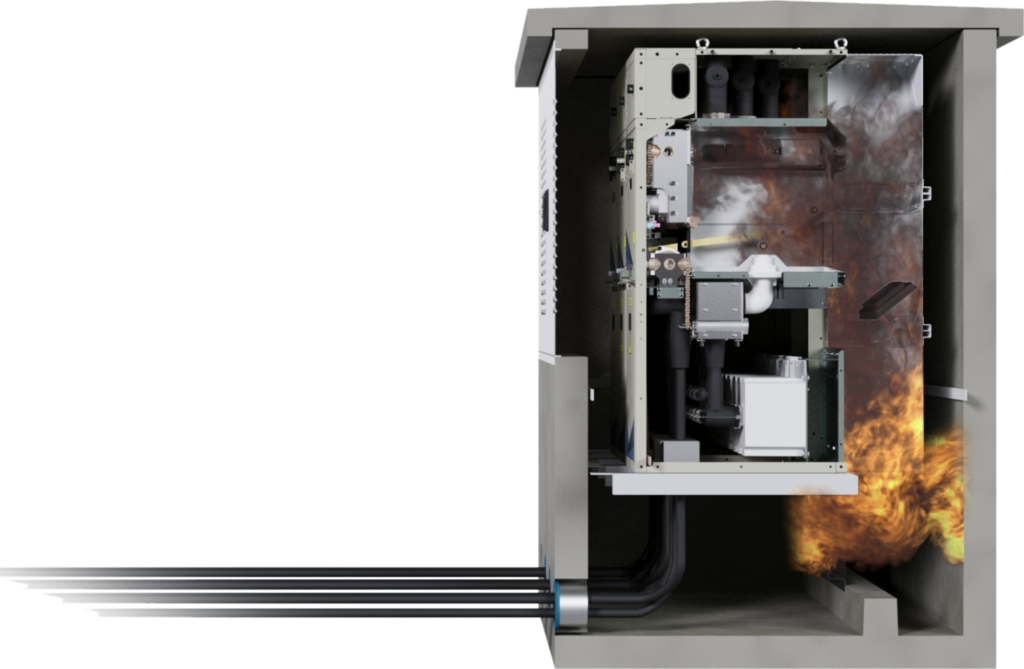
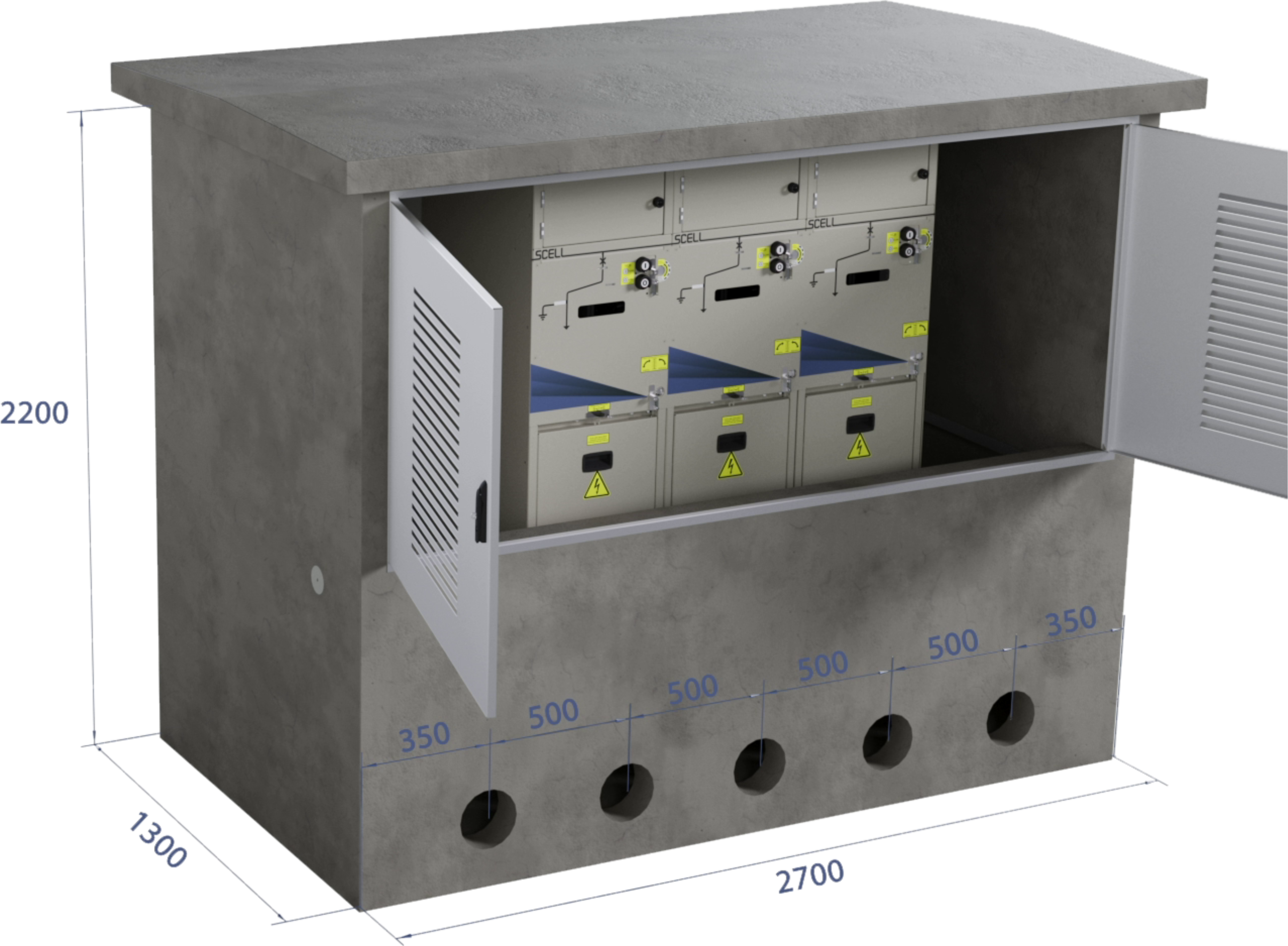
The compact dimensions of the switchgear make it particularly suitable for kiosk substation applications where installation space is limited.
The design provides sufficient room for the switchgear as well as RTU, and control equipment while maintaining easy access for operation and maintenance. Optimized installation clearances, including reduced distance requirements from surrounding walls, enable highly efficient use of the available space without compromising functionality or operational safety.
 |
 |
No comment